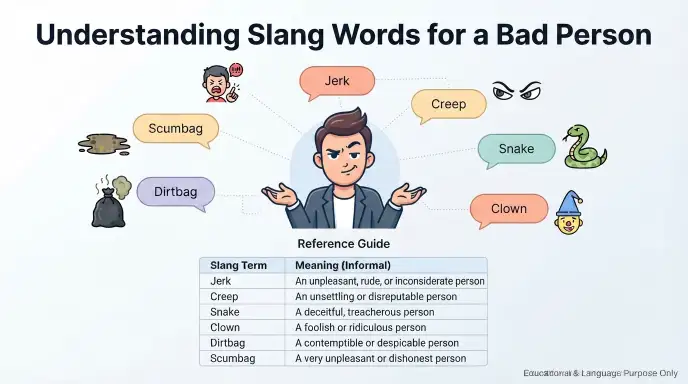
People often search for a slang word for bad person because everyday English has many informal ways to describe someone who behaves badly. A person might be rude, dishonest, selfish, cruel, or simply difficult to deal with, and each situation can call for a different slang expression.
Slang can also change depending on age, location, online community, and tone. A word that sounds funny among friends may sound seriously insulting in another situation. Social media platforms, texting, gaming chats, Reddit, Discord, TikTok, and casual conversations all use informal expressions differently.
In this guide, we’ll look at popular slang terms for a bad person, what they usually mean, how strong they sound, and how they can be used naturally in conversation.
Quick Answer Slang Words for a Bad Person:
Common slang words for a bad person include jerk, creep, scumbag, asshole, dirtbag, loser, snake, punk, douchebag, and villain. Some are mild, while others are offensive, so choose the word based on the context.
Common Slang Words for a Bad Person
There is no single slang word that fits every type of bad person. Some terms describe someone who is generally unpleasant, while others focus on dishonesty, cruelty, or suspicious behavior.
| Slang Word | General Meaning | Tone |
| Jerk | A rude or inconsiderate person | Mild |
| Creep | Someone who behaves in an uncomfortable or disturbing way | Medium |
| Dirtbag | A dishonest or unpleasant person | Strong |
| Scumbag | A very unpleasant or morally bad person | Strong |
| Snake | A deceptive or untrustworthy person | Medium |
| Punk | A weak, disrespectful, or troublesome person | Mild–Medium |
| Loser | Someone viewed as unsuccessful or pathetic | Insulting |
| Villain | Someone acting like the bad guy | Playful/Medium |
Jerk
Jerk is one of the most common and relatively mild slang terms for a bad person. It usually describes someone who is rude, selfish, inconsiderate, or deliberately unpleasant.
For example:
“He was being a jerk to everyone at the party.”
The word does not necessarily mean that someone is seriously evil. It can simply mean that the person behaved badly in a particular situation.
Creep
Creep describes someone whose behavior makes other people feel uncomfortable, suspicious, or unsafe. It is often used when someone crosses social boundaries.
For example:
“That guy keeps staring at everyone. He’s such a creep.”
The term is common in everyday speech and online conversations, but it can be a serious accusation depending on the situation.
Dirtbag
Dirtbag is a stronger insult for someone considered dishonest, selfish, disrespectful, or morally unpleasant.
For example:
“He lied to his friends and then blamed them. What a dirtbag.”
It is usually used negatively and should be avoided in formal or professional communication.
Slang for Different Types of Bad People
The right slang expression often depends on why someone is considered bad. Calling someone a “snake” suggests deception, while calling someone a “jerk” usually focuses on rude behavior.
| Type of Person | Suitable Slang | Why It Fits |
| Rude person | Jerk | Behaves disrespectfully |
| Dishonest person | Snake | Cannot be trusted |
| Unpleasant person | Dirtbag | Generally bad behavior |
| Suspicious person | Creep | Makes others uncomfortable |
| Annoying person | Pain | Difficult to deal with |
| Troublemaker | Punk | Causes problems or acts disrespectfully |
Snake
Snake is slang for someone who is sneaky, deceptive, or disloyal. It is especially useful when someone pretends to be your friend but secretly works against you.
For example:
“I trusted him, but he told everyone my secret. He’s a snake.”
The word is often used in texting, social media discussions, and casual conversations.
Scumbag
Scumbag is a much stronger insult. It refers to someone viewed as extremely unpleasant, dishonest, selfish, or morally bad.
For example:
“He cheated his friends out of their money. Everyone thinks he’s a scumbag.”
Because it is harsh and insulting, it is generally better suited to informal conversations than polite communication.
Slang Terms Used Online
Online communities have their own ways of describing people who behave badly. The exact wording can vary between TikTok, Reddit, Discord, gaming communities, and texting.
Words such as toxic, troll, clown, snake, creep, and villain can appear in online conversations when someone is acting badly.
Toxic
Toxic is widely used online to describe someone whose behavior consistently creates negativity, conflict, manipulation, or stress.
For example:
“He keeps insulting everyone in the group chat. He’s so toxic.”
Unlike some older insults, “toxic” is commonly used to describe relationships, friendships, online communities, and gaming behavior as well as individual people.
Troll
A troll is someone who deliberately provokes or annoys other people online, often to get an emotional reaction.
For example:
“Don’t argue with him. He’s just trolling everyone.”
A troll is not necessarily a bad person in every part of life. The word specifically focuses on disruptive or provocative online behavior.
Mild vs Strong Slang
Not every slang term for a bad person has the same level of offensiveness. Choosing the right intensity is important if you want your English to sound natural.
| Level | Examples | Typical Use |
| Mild | Jerk, punk, clown | Casual criticism |
| Medium | Creep, snake, loser | Stronger personal criticism |
| Strong | Dirtbag, scumbag | Serious insult |
| Very Strong | Certain profanityifbased insults | Highly offensive situations |
A useful rule is to consider who you are talking to and where you are saying it. A mild term may work among friends, while a strong insult can easily start an argument.
Slang Word for Bad Person in a Sentence
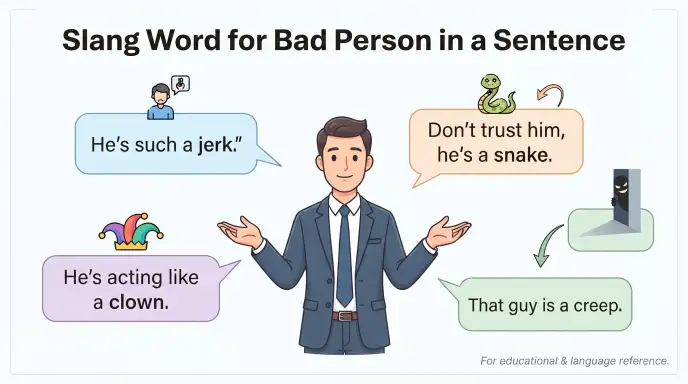
Understanding a slang word becomes easier when you see it in natural sentences.
Casual Examples
“He’s being a jerk today.”
“She turned out to be a snake.”
“Don’t trust that guy; he’s a creep.”
“That villain betrayed everyone.”
“What a dirtbag move.”
“He’s acting like a total clown.”
These examples show that slang can describe either the person or their behavior. For instance, “dirtbag” directly labels someone, while “dirtbag move” criticizes something they did.
More Slang Words for a Bad Person
English slang has many informal terms for someone who behaves badly. However, the meaning can change depending on the situation, tone, and relationship between speakers.
| Slang Word | Meaning | Strength |
| Clown | Someone acting foolish or ridiculous | Mild |
| Punk | A disrespectful or troublesome person | Mild–Medium |
| Loser | Someone seen as pathetic or unsuccessful | Medium |
| Douchebag | An arrogant, unpleasant person | Strong |
| Dirtbag | A person with very poor behavior or morals | Strong |
| Scumbag | Someone considered seriously unpleasant or dishonest | Strong |
| Snake | A deceptive or disloyal person | Medium |
| Creep | Someone who makes others uncomfortable | Medium |
| Toxic | Someone whose behavior creates negativity | Medium |
| Villain | A person acting as the “bad guy” | Contextifdependent |
Clown
Clown is often used when someone behaves foolishly, immaturely, or embarrassingly. Online, it can be a playful insult rather than a serious accusation.
Example:
“He lied about the whole story and now he looks like a clown.”
On social media, someone might also call a person a “clown” when they make a ridiculous comment or poor decision.
Punk
Punk can describe someone who is disrespectful, troublesome, or acting tough. The exact meaning depends heavily on context and regional usage.
Example:
“That punk kept causing problems at the game.”
It is informal and can sound confrontational, so it is not appropriate for formal situations.
Loser
Loser is used as an insult for someone perceived as unsuccessful, pathetic, uncool, or lacking confidence. It can sometimes be used jokingly between friends, but it can also be hurtful.
Example:
“He called me a loser because I refused to join them.”
Because the word directly attacks a person rather than just their behavior, use it carefully.
Slang for a Dishonest or Disloyal Person
Some slang terms specifically describe people who cannot be trusted. These are useful when the problem is betrayal rather than simple rudeness.
Snake
A snake is someone who acts secretly or dishonestly, especially toward friends or people who trust them.
Example:
“She pretended to support me but secretly worked against me. What a snake.”
The expression “snake in the grass” can also describe someone who appears harmless but is secretly dangerous or deceptive.
TwoifFaced
Twoiffaced describes someone who behaves differently depending on who they are with, especially someone who is friendly to a person’s face but speaks badly about them behind their back.
Example:
“I stopped trusting him because he’s so twoiffaced.”
This expression is common in everyday English and online discussions.
Backstabber
A backstabber is someone who betrays another person, especially after gaining their trust.
Example:
“He shared my private message with everyone. He’s such a backstabber.”
This term focuses strongly on betrayal.
Slang for a Mean Person
When someone is intentionally unkind, rude, or cruel, several informal expressions can work.
Jerk
Jerk remains one of the safest informal choices when you want to criticize someone without using profanity.
Example:
“He was a jerk when she asked for help.”
Meanie
Meanie is a playful and much softer word. It is often used jokingly or when talking to children.
Example:
“Don’t be a meanie. Give your brother a turn.”
Unlike “scumbag” or “dirtbag,” it usually does not sound seriously aggressive.
Bully
Bully refers to someone who repeatedly intimidates, humiliates, threatens, or mistreats another person.
Example:
“Everyone avoided him because he was known as a bully.”
“Bully” is more specific than simply calling someone a bad person because it focuses on harmful behavior toward others.
Slang Used in Texting and Social Media
Informal descriptions of bad behavior are especially common in texting and social media. People often shorten their reactions or use humorous labels.
For example:
“Bro is toxic 💀”
“That dude is a whole clown.”
“Nah, he’s a snake.”
“What a jerk.”
“She really showed her true colors.”
These expressions can appear in casual conversations, comments, group chats, gaming communities, and social platforms.
Toxic Person
Calling someone a toxic person usually means their behavior repeatedly creates negativity, drama, manipulation, or conflict.
Example:
“I left the group because the conversation had become too toxic.”
Notice that “toxic” does not always mean someone is simply evil or bad. It often describes a pattern of unhealthy behavior.
Clown
On social media, clown can be used humorously when someone makes a foolish decision or says something obviously ridiculous.
Example:
“He deleted the evidence and then posted it again. What a clown.”
The tone can range from playful teasing to genuine insult.
Choosing the Right Slang Word
The best slang word depends on exactly what the person has done.
| Situation | BestifFit Slang |
| Someone is rude | Jerk |
| Someone is deceptive | Snake |
| Someone betrays you | Backstabber |
| Someone makes you uncomfortable | Creep |
| Someone creates constant drama | Toxic |
| Someone behaves foolishly | Clown |
| Someone is extremely unpleasant | Scumbag |
| Someone is dishonest and selfish | Dirtbag |
| Someone intimidates others | Bully |
Using a specific word makes your English more natural because you are describing the type of bad behavior, not simply giving someone a general label.
When Not to Use These Slang Words
Slang is useful in casual communication, but it is not suitable everywhere.
Avoid strong insults in job interviews, professional emails, academic writing, customer service, formal complaints, and other serious situations. Even a relatively mild word like “jerk” can sound unprofessional when directed at someone in a workplace.
Instead of:
“My manager is a jerk.”
A professional version could be:
“I found my manager’s behavior disrespectful and difficult to deal with.”
This communicates the same general idea without sounding aggressive.
Common Mistakes With Slang for Bad People
Using Every Slang Word as a Synonym
Not every term has exactly the same meaning. A snake is usually deceptive, while a creep makes people uncomfortable. A bully mistreats or intimidates others.
Using the wrong word can make your sentence sound unnatural.
Using Strong Insults Too Quickly
Words such as scumbag, dirtbag, and douchebag are considerably stronger than jerk.
If you are unsure about the tone, choose a milder expression.
Using Slang in Formal Writing
Slang generally belongs in casual speech, texts, online discussions, entertainment, and informal writing. It should usually be avoided in essays, professional documents, and formal correspondence.
Assuming Slang Has One Meaning Everywhere
Slang can differ between countries, generations, and online communities. A word may be common in American English but less natural in British English, or it may have a different meaning in a particular online community.
Slang vs Formal English
Understanding the difference between informal slang and standard English can help you choose the right expression.
| Slang | More Neutral Alternative |
| Jerk | Rude person |
| Creep | Disturbing or inappropriate person |
| Snake | Dishonest or disloyal person |
| Scumbag | Morally unpleasant person |
| Dirtbag | Dishonest or unpleasant person |
| Clown | Foolish person |
| Toxic | Negative or harmful person |
| Bully | Person who intimidates others |
This distinction is especially useful for English learners. You may understand a slang word perfectly but still need to know when not to use it.
FAQs About Slang Words for a Bad Person
Q1. What is a common slang word for a bad person?
Jerk is one of the most common mild slang words for a person who behaves rudely, selfishly, or inconsiderately.
Q2. What slang word means a dishonest person?
Snake is a common slang term for someone who is deceptive, sneaky, or disloyal. Backstabber can also describe someone who betrays another person.
Q3. What is a slang word for a mean person?
Jerk is a common choice, while meanie is a much softer and more playful expression. Scumbag and dirtbag are considerably stronger.
Q4. What does “scumbag” mean?
Scumbag is a strong insult for someone considered extremely unpleasant, dishonest, selfish, or morally bad. It is mainly used in informal situations.
Q5. What does “snake” mean when describing a person?
Calling someone a snake means you consider them sneaky, deceptive, or disloyal. It often refers to someone who betrays another person’s trust.
Q6. Is “jerk” a bad word?
Jerk is an insult, but it is generally considered much milder than profanityifbased insults. It can describe someone who is rude or inconsiderate.
Q7. What is the best slang word for a toxic person?
Toxic itself is commonly used to describe someone whose repeated behavior creates negativity, conflict, manipulation, or stress. The best term still depends on the person’s specific behavior.
Conclusion
There are many ways to describe a bad person in slang, but the most natural choice depends on what the person actually did. Jerk works well for general rudeness, snake suggests dishonesty or betrayal, creep focuses on uncomfortable behavior, and toxic often describes a repeated pattern of negativity. Stronger words such as dirtbag and scumbag carry a much harsher tone.
If you are using these expressions in texting, social media, gaming chats, or casual conversations, understanding their tone is just as important as knowing their definitions. Slang can make your English sound more natural, but using the wrong expression or using a strong insult in a formal situation if can easily create confusion.
The key is to match the word with the behavior and the situation. When in doubt, a milder term like jerk is usually safer than a highly offensive insult.

I’m Dylan Foster, a slang and internet culture writer passionate about exploring how people communicate online and in everyday conversations. I write about texting abbreviations, social media expressions, and modern slang to help readers understand meanings, origins, and real-world usage in a simple way.